
Mesenteric volvulus (torsion) is a rare, rapidly progressive, and life-threatening condition in which the intestines twist around the tissue that supports them, called the mesentery. The mesentery contains the blood vessels that supply the intestines. When it twists, blood flow to a large portion of the intestinal tract can be severely reduced or completely blocked.
The veins that carry blood away from the intestines are typically affected first, causing blood and fluid to accumulate within the intestinal wall. As the twist becomes more severe, the arteries supplying the intestine may also become obstructed. Without adequate blood flow, the affected intestine is deprived of oxygen and nutrients, and the organs begin to die. Damage to the intestinal lining also allows bacteria and toxins normally contained within the intestine to enter the abdomen and bloodstream. These changes can result in severe shock and can become fatal within a very short period of time.
Mesenteric volvulus is rare in dogs, and in many cases, there is no identifiable cause. It has been reported in association with several gastrointestinal diseases, including intestinal inflammation, foreign bodies, intestinal tumours, intussusception, and exocrine pancreatic insufficiency.
Although mesenteric volvulus can occur in any dog, it has most commonly been reported in medium-, large-, and giant-breed dogs, with German Shepherds reported most commonly.
Dogs with mesenteric volvulus typically become ill very suddenly and can deteriorate over only a few hours.
Signs may include:
- sudden abdominal distension (bloating)
- abdominal pain which may cause crying, restlessness, or pacing
- weakness or collapse
- pale gums
- vomiting or attempts to vomit
- excessive salivation
- bloody diarrhea or passage of blood from the rectum
- severe lethargy or inability to stand
Because these signs can resemble other abdominal emergencies, including GDV(gastric dilatation-volvulus, commonly called bloat), intestinal obstruction, or internal bleeding, mesenteric volvulus cannot be diagnosed by clinical signs alone.
A dog with sudden abdominal distension, pain, weakness, or collapse requires immediate veterinary assessment. Mesenteric volvulus is a true surgical emergency, and delaying treatment can substantially reduce the chance of survival.
Initial assessment typically includes a physical examination and blood tests while the veterinary team simultaneously begins treatment for shock. Blood tests can identify changes associated with dehydration, poor circulation, electrolyte abnormalities, or organ dysfunction, but there is no single blood test that confirms mesenteric volvulus.
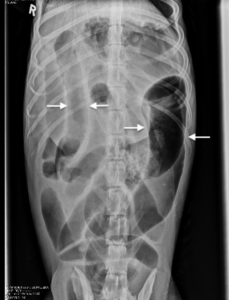
Abdominal radiographs (X-rays) are often particularly useful. A characteristic finding is severe, widespread distension of the small intestine with gas (Figure 1). The stomach is generally in its normal position, which can help distinguish mesenteric volvulus from GDV.
The definitive diagnosis is usually made during surgery, when the veterinary surgeon can directly examine the intestines and identify twisting of the mesentery.
Initial therapy focuses on stabilizing the dog sufficiently for anesthesia and surgery. This commonly includes IV fluids to improve circulation, pain medication, and other supportive treatments as needed. Antibiotics are often administered because damage to the intestinal lining can allow bacteria to enter the bloodstream and abdominal cavity.
Surgery should be performed as soon as possible once mesenteric volvulus is suspected. During surgery, the surgeon examines the intestines to determine the extent of the volvulus and, most importantly, whether the loss of blood supply has already caused irreversible damage. If the condition is identified early enough that the intestinal tissues remain viable, the twist may be carefully corrected (derotated) to restore blood flow.
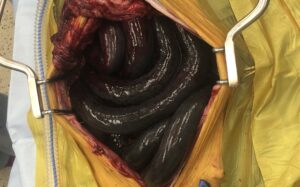
If the loss of blood supply has caused permanent damage to a limited section of intestine, the affected portion may be surgically removed and the healthy ends reconnected. Unfortunately, mesenteric volvulus progresses very rapidly, and many dogs already have advanced intestinal damage by the time surgery is performed. In these cases, surgery may reveal that most of the intestinal tract is severely distended, dark purple to black, and no longer viable (Figure 2). Removal of such an extensive portion of the intestine is generally not compatible with normal digestive function or an acceptable quality of life. When the damage is this extensive, the volvulus cannot be successfully treated and humane euthanasia is recommended.
Even when the intestine remains viable and the twist can be corrected, restoring blood flow to previously oxygen-deprived tissue can cause additional complications. When circulation is restored, inflammatory substances and toxins that have accumulated within the damaged intestinal tissues can be released into the bloodstream and circulated throughout the body. This process, known as reperfusion injury, can trigger widespread inflammation and contribute to further tissue and organ damage. As a result, dogs may remain critically ill or even deteriorate after the volvulus has been successfully corrected and often require intensive postoperative care.
The prognosis for dogs with mesenteric volvulus is generally grave. The condition progresses very rapidly, and many dogs have extensive, irreversible intestinal damage by the time surgery is performed.
The most important factor affecting outcome is the extent of irreversible intestinal damage present at the time of surgery. When mesenteric volvulus is recognized early and the intestine remains viable, correction of the twist alone may be successful.
Dogs that recover from surgery generally require intensive postoperative monitoring and supportive care. Depending on the severity of the disease, treatment may include intravenous fluids, pain medication, antibiotics, nutritional support via a feeding tube, monitoring of blood pressure and electrolytes, and repeated assessment for complications. Potential complications include continued shock, sepsis, organ dysfunction, reperfusion injury, and complications associated with removal and reconnection of the intestine when intestinal resection is required. Hospitalization for several days or longer may be necessary.
Premier Sponsors