A glossectomy refers to surgical removal of portions of the tongue. Based on the volume of the tongue that is removed a glossectomy may be partial, sub-total, near-total, or total. Glossectomies are most commonly performed for management of traumatic tongue injuries or for the treatment of tumors of the tongue. Tumors of the tongue are uncommon, representing approximately 2-4% of oropharyngeal tumors. A variety of tumor types have been described with malignant melanoma and squamous cell carcinoma being most commonly diagnosed.
The signs associated with traumatic tongue injuries or tumors of the tongue will vary but may include:
- Drooling – this may be blood tinged
- Excessive licking behavior
- Difficulty eating – struggling to pick food up, dropping food, taking longer to eat than usual
- Decreased appetite
- Foul odor from the mouth
- Visible changes to the size or shape of the tongue
A thorough oral examination will be a key component of the diagnostic investigation. Your pet may require sedation or general anesthesia to accomplish this. This allows for both a visual inspection of all surfaces of the tongue, as well as adjacent oral structures. Palpation of the tongue may also help to identify any changes in tissue thickness.
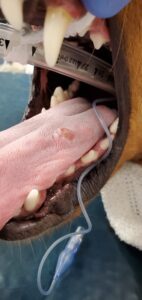
With traumatic injuries to the tongue, treatment may be performed at the same time as the initial oral examination. Other diagnostics tests may be recommended based on your pet’s specific trauma.
With suspected tumors of the tongue, further diagnostic investigation may include:
- Advanced imaging of the head to better understand the extent of the tumor and determine if other local structures are affected
- Regional lymph node aspirates to determine if the disease has metastasized (spread)
- Thoracic imaging (x-rays or CT scan) to determine if the disease has metastasized (spread) to the lungs
- Biopsy of the tongue lesions to determine the specific type of tumor
Together these diagnostic tests can help to determine how much of the tongue is affected, whether surgical treatment is possible, if the tumor has metastasized to other tissues and may help to inform the prognosis for your pet.
For traumatic tongue injuries, the extent of the injury will determine if a glossectomy is required for treatment. Superficial or partial thickness lacerations may be allowed to heal by second intention (no surgery) or may require sutures to close the tissues. This may be performed by your primary care veterinarian. If the traumatic injury is full thickness, primary closure with sutures may be an option, or a partial glossectomy may be recommended. If a partial glossectomy is recommended, your veterinarian may choose to refer you to an ACVS board-certified veterinary surgeon.
For tumors of the tongue, the location and size of the tumor will determine the extent of the glossectomy – partial, sub-total, near-total or total. Adjunct treatments such as chemotherapy and/or radiation therapy may be considered based on the tumor type.
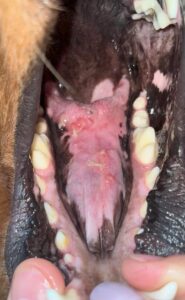
During the post-operative period the primary focuses will include pain management and nutrition.
Most pets will require injectable pain medications in the immediate postoperative period but should be well managed on oral pain medications when they are discharged from hospital. Your veterinary surgeon will guide decision making on the types of medications recommended for your pet.
Depending on the extent of your pet’s glossectomy eating and drinking may be challenging in the short and/or long term. The larger the volume of the tongue that is removed, the greater the potential challenges of eating and drinking become. Your ACVS board-certified veterinary surgeon may choose to place a feeding tube to help supplement nutrition while your pet learns how to eat and drink following surgery. While most pets will learn how to eat and drink again, some pets may require long-term supplementation through feeding tubes.
Excessive drooling may persist in the post-operative period, requiring regular cleaning and monitoring of the skin around the muzzle and neck to avoid development of moist dermatitis.
The overall prognosis for pets undergoing glossectomy will depend on the reason for the glossectomy, the specific tumour type and the extent of the glossectomy itself. Your ACVS board-certified veterinary surgeon may recommend adjunct treatment based on the tumor type, which may alter the prognosis. Most pets can learn to eat and drink following glossectomy, however this may take patience and time to find a new feeding routine.
Premier Sponsors