
A bone sequestrum is a piece of necrotic (dead) bone that is detached from healthy bone tissue. Sequestrum formation is usually the result of local infection, exposure of bone (loss of periosteum tissue coverage of bone), or extensive trauma (loss of blood supply to the segment of bone). As the superficial layers of a segment of bone become necrotic, the segment is gradually walled off, or sequestered, from the healthy intact bone. Reactive bone forms around this necrotic bone sequestrum, and a draining tract forms that communicates with the skin.
The bone sequestrum will act as a foreign body and harbour bacteria, causing chronic inflammation and infection. This will delay wound healing and can result in excessive granulation tissue (proud flesh) and commonly a chronic nonhealing wound with discharge.
Bone sequestra are most common in the distal limbs of horses and farm animals due to the poor soft tissue coverage of bone, making this region susceptible to damage to the bone’s blood supply as a result of trauma.
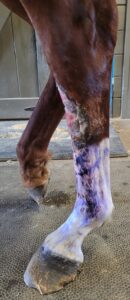
- Non-healing wound / chronic draining tract with discharge – commonly will drain constantly but you may see transitory healing followed by repeated episodes of drainage (Figure 1).
- Soft tissue swelling.
- Discomfort can vary from visible lameness, to only showing discomfort on palpation of the site.
- The infection is localized to the sequestrum and will not cause systemic illness or show up on bloodwork.
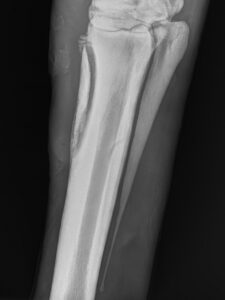
Bone sequestrum can be highly suspected in a chronic non-healing wound with drainage, however definitive diagnosis is obtained with radiographs (x-rays; Figure 2). Radiographs will not show any signs of bone sequestrum at the time of injury, and it usually takes 10-14 days for the sequestrum to appear as a segment of bone surrounded by lysis of the parent bone. This may mean that repeat radiographs 2-3 weeks following trauma are required to diagnose sequestrum.
Ultrasound may also be used to assess surrounding soft tissues and localize the bone sequestrum for surgical planning.
Antibiotics may temporarily decrease swelling and discharge, but alone will not resolve a bone sequestrum; drugs will fail to reach the bacteria harboured by the sequestrum. In some cases, that have a very small bone sequestrum, with minimal tissue reaction and minor discomfort to the animal, the sequestrum may resorb on its own with time, supportive care, and appropriate antibiotics.
More commonly surgical treatment is required and allows for faster resolution.
Surgical removal of the bone sequestrum is called sequestrectomy. Accurate removal and debridement of the necrotic bone can eliminate the infection quickly. Surgery may be performed under standing sedation and locoregional anesthesia, or under general anesthesia, depending on the location and size of the sequestrum and temperament of the patient. Closure of the wound may be possible in some cases with small sequestrum and minimal infection, whereas in many cases a portion or all of the wound may be left open to allow drainage and healing by second intention. Consultation with an ACVS board-certified surgeon will determine the best option for each individual case.
After surgical removal of a sequestrum, your animal may be prescribed a short course of analgesic (non-steroidal anti-inflammatory) and/or antibiotic medications. The animal will likely have a bandage during the initial healing process to protect the wound until bone is covered and healing is underway.
Complications are rare but can include opening/dehiscence of a closed wound, surgical site infection, and rarely bone fracture in the case of very large sequestrum.
Prognosis is good and patients typically go on to heal without complication once the sequestrum has been removed. The animal is expected to fully return to full production/performance.
Premier Sponsors