Your pet just had surgery, and their recovery has just begun. How you care for them at home plays an important role in promoting a smooth recovery and positive outcome. Understanding what to expect during recovery and knowing which changes are normal can help you support your pets healing and comfort.
Post–operative care is a collaborative effort between you, your primary care veterinarian, and your ACVS board-certified veterinary surgeon. While much of the recovery occurs at home, regular communication with your veterinary team allows them to monitor progress and address concerns as they arise. Your veterinary surgeon will supply discharge instructions, which typically include guidance on pain management, activity restriction, incision care and monitoring, and may also address nutritional or hydration support. Familiarity with expected post-anesthetic effects and the typical recovery timeline will help you play an active role in your pet’s postoperative care.
Normal signs after anesthesia
- Increased sleepiness or low energy:
- Pets commonly sleep more than usual and may be less interactive or interested in activity for the rest of the day after anesthesia. This can sometimes continue into the following day.
- Decreased appetite:
- It is normal for your pet to eat less than usual or skip a meal during the first 24 hours after surgery. Appetite typically improves as anesthetic effects wear off and comfort increases.
- Mild disorientation or behavior changes:
- Some pets may appear restless, confused, or more vocal as they recover from anesthesia. These signs should gradually improve over time.
- Slower movement or reduced coordination:
- Temporary weakness or unsteadiness can occur, particularly in the first several hours after surgery, and should resolve as recovery progresses.
Proper incision monitoring is an important part of your pet’s recovery. Checking the incision daily allows for early identification of potential complications.
- Normal appearance:
-
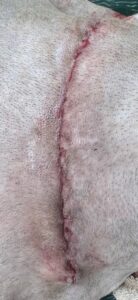
Figure 1. Picture of normal incision with intradermal sutures. A healing incision is typically clean and dry, with the edges closed and minimal swelling. Mild redness or bruising around the incision can be normal during the first few days after surgery. (Figure 1)
-
- Mild swelling or firmness:
- Slight swelling or a firm area under the incision may be present, particularly in the first week, and often improves gradually over time.
- Discharge:
- A small amount of clear or blood-tinged fluid may be seen immediately after surgery. Ongoing discharge, thick fluid, pus or foul odor is not normal and should be reported.
- Licking or chewing:
- Pets that lick, chew, or scratch at their incision can disrupt healing and increase the risk of infection. Appropriate protective devices will be recommended by your veterinary team depending on the location of the incision and the individual pet.
- Topical products:
- Ointments, sprays, or other topical products should not be applied to the incision unless specifically directed by your veterinary team
- Sutures and staples:
- Some incisions are closed using buried, absorbable sutures that do not require removal. Other incisions are closed with external sutures or staples which should only be removed by a veterinary professional. (Figure 2)
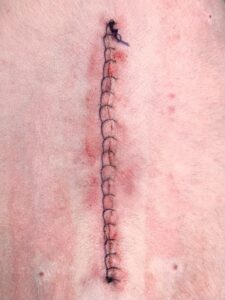
Figure 2. Picture of normal incision with skin sutures.
- Some incisions are closed using buried, absorbable sutures that do not require removal. Other incisions are closed with external sutures or staples which should only be removed by a veterinary professional. (Figure 2)
- Effect of activity:
- Excessive movement or jumping can place stress on the incision and delay healing. Following activity restrictions provided at discharge helps protect the incision during recovery.
- Tracking changes:
- Taking periodic photos can help document healing and allow your veterinary team to assess changes if concerns arise.
- Bathing:
- The incision should be kept clean and dry. However, bathing or swimming should be avoided until healing is complete and clearance is given.
Protecting the surgical site is essential during recovery. Licking or chewing at an incision can delay healing and increase the risk of infection.
-
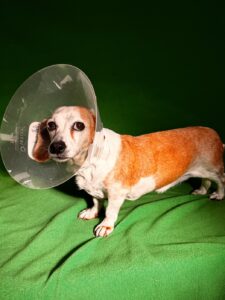
Figure 3. Picture of patient in e-collar An Elizabethan collar is commonly recommended to prevent access to the incision and should be worn as directed by your veterinary team. (Figure 3)
- Surgical sleeves or recovery body suits may be recommended in select cases based on the incision location and individual patient. These should only be used if specifically advised by your veterinary team.
Effective pain control is an important part of recovery and helps support healing and comfort after surgery. Because pets may not always show obvious signs of pain, medications are often prescribed even when a pet appears comfortable.
- Medication use:
- Pain medications should be given exactly as directed. Skipping doses or stopping medications early can result in increased discomfort and may slow recovery.
- Multimodal pain management:
- Your veterinary surgeon likely used several techniques such as epidurals, or nerve and incisional blocks, to help address pain through different pathways to improve comfort.
- Monitoring comfort:
- Changes in activity level, appetite, posture, or behavior may indicate discomfort. Owners should report concerns so pain management can be adjusted if needed.
Limiting activity after surgery is critical to allow proper healing and reduce the risk of complications. Even when pets appear to feel well, they are still healing and can easily injure themselves with excessive activity.
- Leash use:
- Dogs should be taken outside on a leash for bathroom breaks only, unless otherwise instructed. Off-leash activity should be avoided during the restricted period.
- Activity restriction:
- Running, jumping, playing, and use of stairs should be limited as directed by your veterinary team. Pets should be kept in a controlled environment, such as a crate or small room, to prevent unsupervised activity.
- Controlled exercise:
- Short, controlled walks or specific exercises may be recommended as part of recovery. In some cases, referral for a structured canine rehabilitation program may be advised to support safe, guided return to function.
- Gradual progression:
- Activity is typically increased in stages based on healing and follow-up evaluations. Advancing activity too quickly can delay recovery or result in injury.
- Mental stimulation:
- When activity must be restricted, providing calm mental stimulation such as food puzzles and quiet engagement can help support emotional well-being during recovery.
Cats often recover quietly and may mask signs of discomfort, making close observation at home especially important.
- Environmental management:
- Cats should be confined to a small, quiet space to limit jumping, climbing, and access to high surfaces during recovery. (Figure 4)
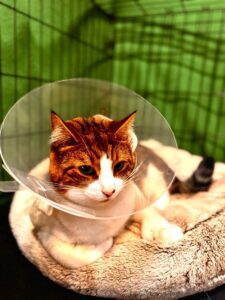
Figure 4. Picture of cat in e-collar
- Cats should be confined to a small, quiet space to limit jumping, climbing, and access to high surfaces during recovery. (Figure 4)
- Litter box considerations:
- Depending on the procedure, a low-sided litter box may be helpful to reduce strain when entering and exiting. In some cases, a non-clumping litter may be recommended temporarily to minimize incision contamination.
- Behavioral changes:
- Temporary hiding, reduced interaction, or changes in routine can occur during recovery and should gradually improve as healing progresses.
Appropriate nutrition plays an important role in healing after surgery. Appetite changes are common in the early recovery period, but maintaining adequate calories and protein intake supports tissue repair, immune function, and overall recovery.
- Temporary appetite changes:
- Some pets may eat less or skip meals during the first 24 hours after surgery. Appetite typically improves as the effects of anesthesia resolve and pain is well controlled.
- Following feeding instructions:
- Animal owners should follow any feeding recommendations provided at discharge, including meal size, frequency, and diet type. Sudden diet changes should be avoided unless specifically directed by the veterinary team.
- Hydration:
- Access to fresh water should always be available unless otherwise instructed. Decreased water intake or signs of dehydration should be reported.
- Assisted or tube feeding:
- In some cases, pets may be discharged with a feeding tube to support nutrition during recovery. Feeding tubes are used when a pet is unable or unwilling to eat enough on their own and allow nutrition to be provided safely while healing occurs. You will receive specific instructions if tube feeding is required.
Temporary changes in urination and bowel movements can occur after surgery and anesthesia. These changes are often related to medications, altered activity, stress or changes in appetite.
- Urination:
- Some pets may urinate less or more frequently during the first day after surgery. Less commonly, temporary urinary incontinence may occur, particularly in pets that received certain medications or procedures. In most cases, bladder control improves as anesthetic effects wear off.
- Bowel movements:
- It is common for pets to have a delayed bowel movement for one or two days after surgery. Reduced food intake, pain medications, and decreased activity can all contribute.
- Straining or discomfort:
- Mild effort, hesitation, or discomfort posturing may occur initially and should improve with time.
- Diarrhea or soft stool:
- Soft stool or mild diarrhea can occur due to stress, diet changes, or medications and often resolves without intervention.
Some pets may go home with a bandage, splint or cast to help protect the surgical area and support healing during recovery. (Figure 5) Proper monitoring at home is important to help prevent complications.
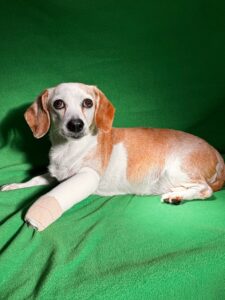
- Keeping the bandage clean and dry:
- Bandages, splints, and casts should be kept clean and dry. Exposure to moisture can weaken the materials and increase the risk of skin infection.
- Monitoring the limb:
- Check the toes or exposed portion of the limb daily for swelling, redness, or discharge. Increased swelling, cold toes, or sudden discomfort may indicate a problem.
- Changes in fit:
- Bandages and casts may change in fit as swelling fluctuates and can become loose, tight, or shift out of position over time. Any slipping, bunching, foul odor, or visible sores should be reported.
- Do not adjust at home:
- Bandages, splints, and casts should not be adjusted, trimmed, or removed at home unless specifically instructed by your veterinary team.
Follow-up care is an important part of the recovery process and allows your veterinary team to assess healing and make treatment recommendations as needed. Even when recovery appears to be going well at home, scheduled recheck appointments provide valuable information about your pet’s progress.
- Recheck appointments:
- Follow-up visits may be recommended to evaluate the incision, remove sutures or staples if present, assess mobility, and review overall recovery. The timing of these visits varies depending on the procedure and individual patient.
- Communication with the veterinary team:
- Sharing updates, photos, or videos can help your veterinary team assess recovery and address concerns early. Questions or changes should be reported rather than waiting for a scheduled appointment.
- Adjustments to the recovery plan:
- Recovery plans can be modified based on healing, comfort, or follow-up findings. This can include changes to medications, activity recommendations, or the addition of rehabilitation or supportive care.
Animal owners should contact their veterinary team if any concerns arise during recovery. Early communication can help address issues promptly and prevent complications. Specific reasons to reach out include:
- Worsening lethargy, weakness, or behavior changes that do not improve over time.
- Persistent or worsening pain, vocalization, or reluctance to move.
- Incision concerns such as increasing redness, swelling, heat, discharge, odor, or opening of the incision.
- Licking, chewing, or interference with the incision that cannot be controlled.
- Poor appetite that persists beyond the expected recovery period, vomiting, or concerns about hydration.
- Difficulty urinating, inability to urinate, persistent urinary incontinence, or significant straining.
- Diarrhea, constipation lasting several days, or blood in the urine or stool.
- Bandage, splint, or cast issues including slipping, swelling of the toes, foul odor, moisture, or increased discomfort.
- Any sudden change in comfort, limb use, or overall condition that causes concern.
If you are unsure whether a change is normal it is always appropriate to contact your veterinary surgeon or veterinarian for guidance.
Recovery after surgery is a process that extends beyond the procedure itself and relies on thoughtful care at home. Following discharge instructions, even when your pet appears to be feeling better, helps protect healing tissues and reduces the risk of setbacks. It is important to remember recovery timelines vary depending on the procedure and individual patient. With patience, consistency, monitoring, and adherence to postoperative recommendations most pets recover well and return to a good quality of life. Proper postoperative care requires a team effort between you, your veterinarian, and your ACVS board-certified veterinary surgeon, all working together to support your pet through a safe and successful recovery.
Premier Sponsors